The craft
Srikalahasti vs. Machilipatnam Kalamkari
“Kalamkari” isn't one single craft — it's an umbrella over two distinct traditions from two different parts of Andhra Pradesh, each with its own tools, subject matter, and history. Knowing which is which is the fastest way to actually understand what you're looking at.
Srikalahasti — the pen-drawn tradition
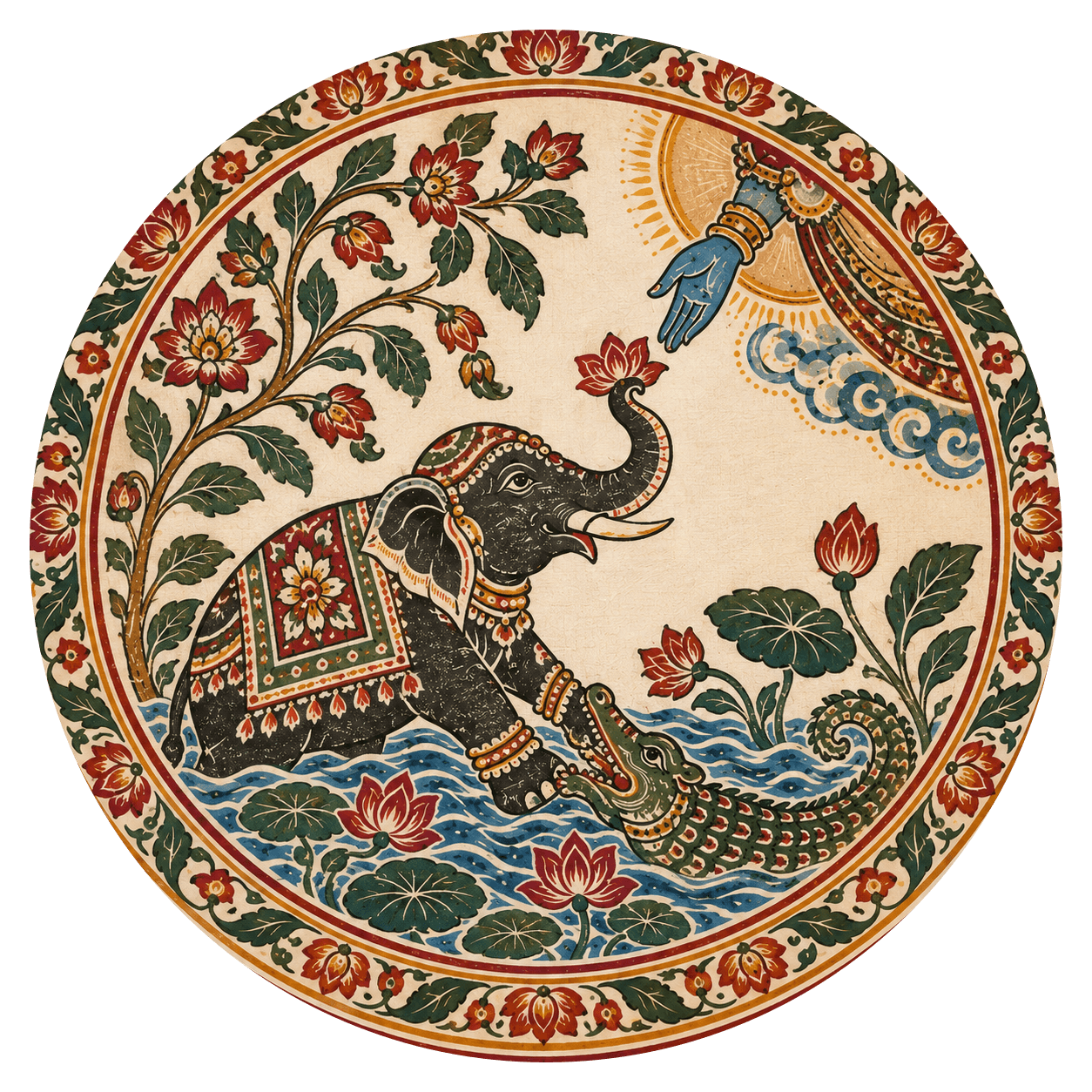
Named for the temple town of Srikalahasti, this style is drawn entirely freehand with a bamboo kalam (pen), no blocks involved at all. It grew up around temples, and its subject matter shows it — scenes from the Ramayana and Mahabharata, deities, and mythological narrative panels, historically used as temple hangings and scrolls told like a story across the cloth. Every line is a single artist's hand, which is part of why no two Srikalahasti pieces are ever quite identical.
Machilipatnam and Pedana — the block-printed tradition
This is the tradition of Pedana, in Andhra Pradesh's Krishna district, where our pieces come from. Here, hand-carved teak blocks — a different block for each colour and outline — stamp the base pattern onto the cloth, with an artisan then filling in and refining detail by hand. Historically, this style developed for trade: Machilipatnam was a major port, and centuries of exporting to Persia and the Middle East pulled its motifs toward the repeating florals, paisleys, and geometric borders that Persian and Islamic textile traditions favoured — a visibly different visual language from Srikalahasti's narrative scenes.
Same roots, different hands
Both traditions share the same natural-dye foundation — myrobalan mordanting, indigo, madder, iron, turmeric — and both belong to Andhra Pradesh. The difference is entirely in the tool and the story it's built to tell: one drawn scene at a time by a single artist, or one carved block repeated and refined into a pattern.
Written with AI assistance and checked by the Kalamkari House team.