The designs
Kalamkari motifs and what they mean
Every Kalamkari piece on Kalamkari House carries a subtitle naming its design, such as "Mustard Cow Herd" or "Pink Mudra Hands with Green", so you can find the motif you love. These are the motifs you will meet most often. Their meanings are the ones widely held in Indian tradition.
Peacock
India's national bird and a favourite in Kalamkari: its fanned tail fills a border or the centre of a panel. It stands for beauty and grace, and in stories it is linked with Lord Kartikeya (Murugan), who rides it.
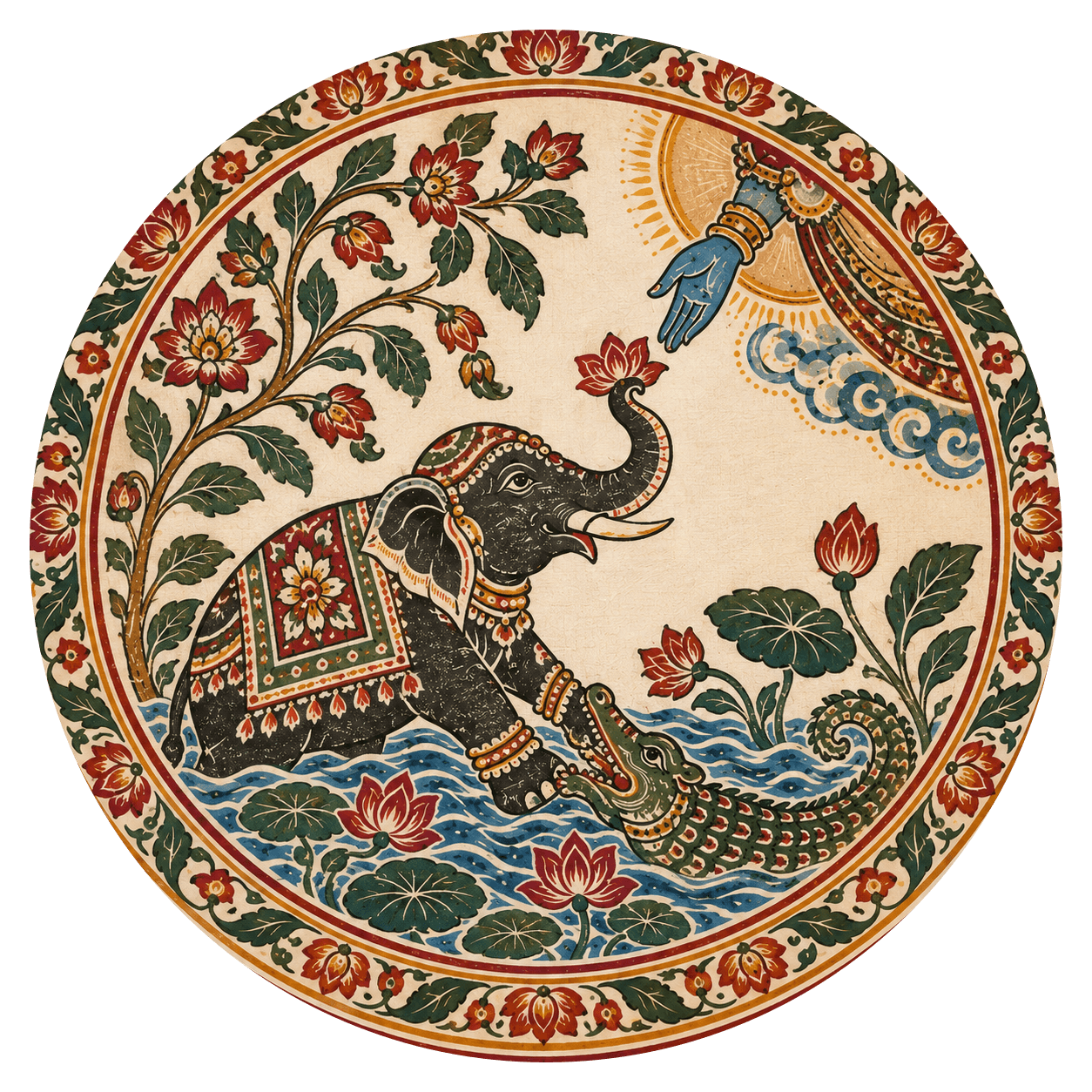
Elephant
A sign of strength, wisdom and good fortune. Elephants appear alone, in processions across a border, or carrying riders under decorated canopies, as in temple festivals.
Lotus
The lotus rises clean from muddy water, which makes it a symbol of purity. It is also the seat of Lakshmi, goddess of wealth. In Kalamkari it appears as single blooms, as buds, and as long flowering vines.
Cow and calf
Cows and grazing herds recall Lord Krishna, the cowherd, and the pastoral life of the villages. A mother cow with her calf is a sign of care and plenty.
Mudra hands
Hands shown in mudras, the gestures of classical dance, each with its own meaning. Andhra Pradesh is the home of Kuchipudi, a classical dance form named after a village in the Krishna district, the same district as Pedana.
Kolam
The geometric patterns drawn with rice flour on doorsteps across South India every morning, to welcome guests and good fortune. In Kalamkari they often alternate with panels of women drawing them.
Tree of life and flowering vines
Trees whose branches carry flowers, birds and fruit. This motif came from Persian textile traditions and became a signature of Machilipatnam printing.
Paisley (mango)
The curved teardrop shape known in India as the mango motif. It stands for fertility and abundance, and is one of the most common Kalamkari border patterns.
Fish, swans and birds
- Fish: often paired with lotus. A pair of fish is an old sign of good fortune in Indian art.
- The swan (hamsa): stands for grace and wisdom.
- Parrots and songbirds: fill the branches of flowering trees.
Find a motif
Search the shop for the motif you want: peacock, elephant, lotus, cow, mudra hands or kolam. The subtitle under each product's name tells you its design.
Written with AI assistance and checked by the Kalamkari House team.